A product stopped being a succession of disconnected files and became one operational history.
VoxMapp connected the product to the design choices, materials, suppliers, production events, quality evidence, stock movements and documents that make it real.
- Object-centred operations
- One reference carried through a distributed production process.
One object. Many actors. One connected history.
- Object
- Components
- Supplier
- Quality
- Stock
- Product
- the stable reference through the operation
- Multi-actor
- suppliers, manufacturers, teams and locations
- End-to-end
- production, quality, stock, movement and documents
- Operational memory
- later work starts with context already created
One object depends on a whole production network.
A luxury object can depend on design specifications, components, specialist suppliers, production orders, quality decisions, stock movements and documentation. Those dependencies rarely live in the same place by default.
The operational question: How can one product remain understandable from design to delivery when its history is distributed across people, suppliers, documents and systems?
The product had to become the reference.
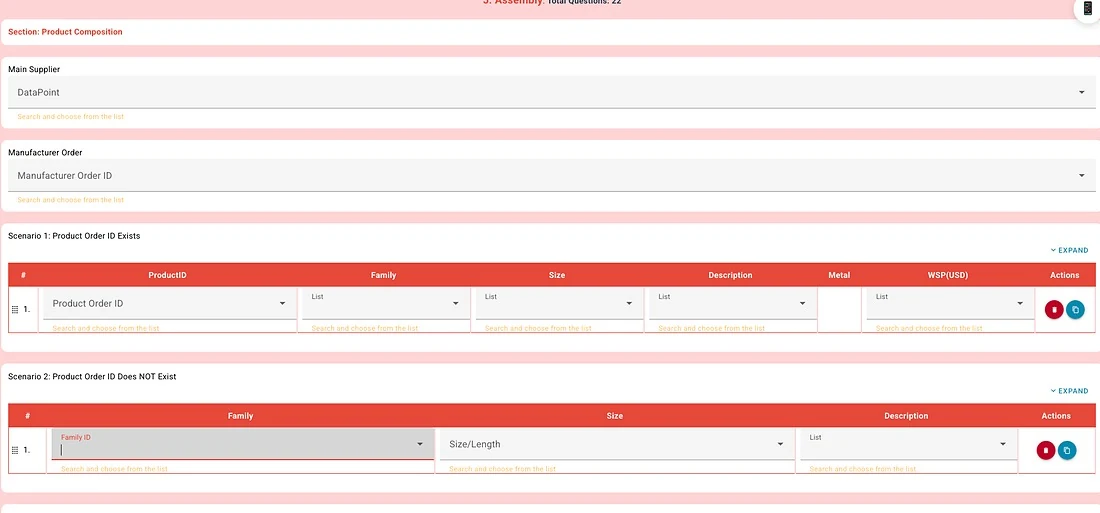
The operating model keeps the product at the centre and attaches the relevant actors, materials and evidence to it.
Product reference
- Design / specification
- Components / materials
- Supplier / manufacturer
- Order / production stage
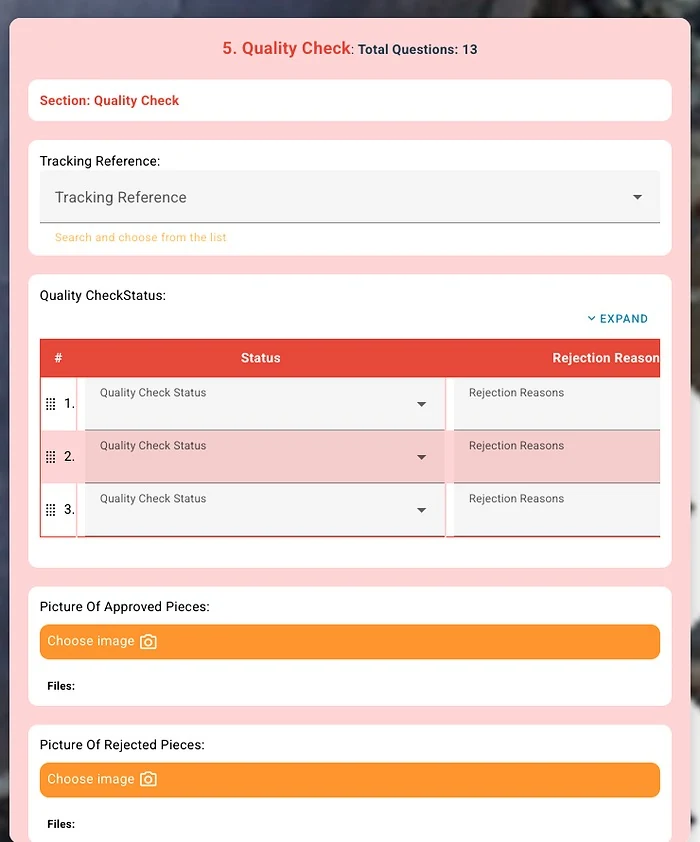
- Quality evidence
- Stock / location
- Transfer / documents
- History carried forward
A single reference keeps the complexity of physical production connected and retrievable.
The same reference travels through the operation.
The real production process covers sampling, orders, supplier delivery, quality control, stock, shipping and client feedback. Here it is compressed into one readable operating thread.
- 01Design
- 02Order
- 03Supplier
- 04Production
- 05Quality
- 06Stock
- 07Transfer
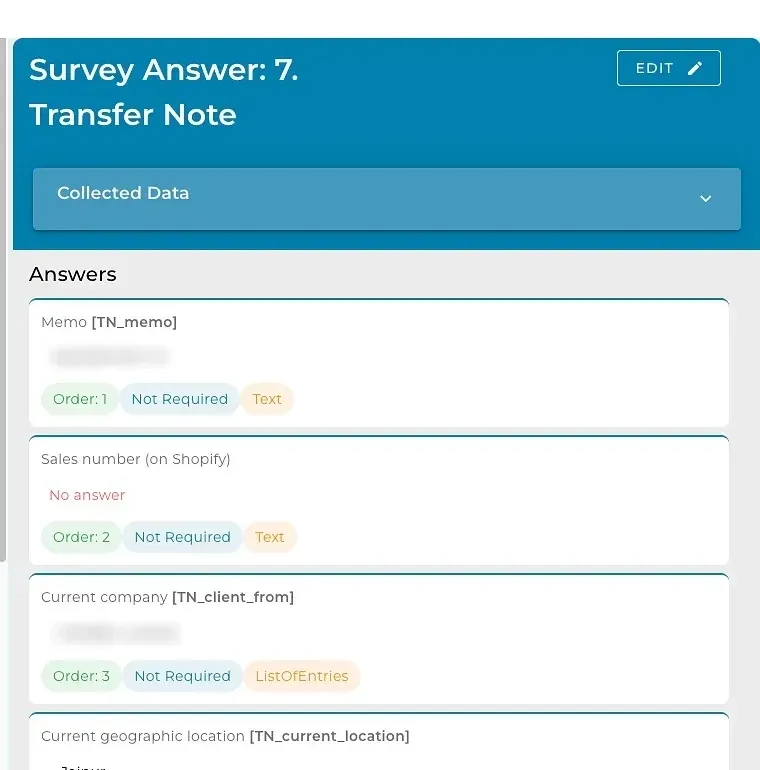
Once the records connect, the operation becomes visible as relationships.
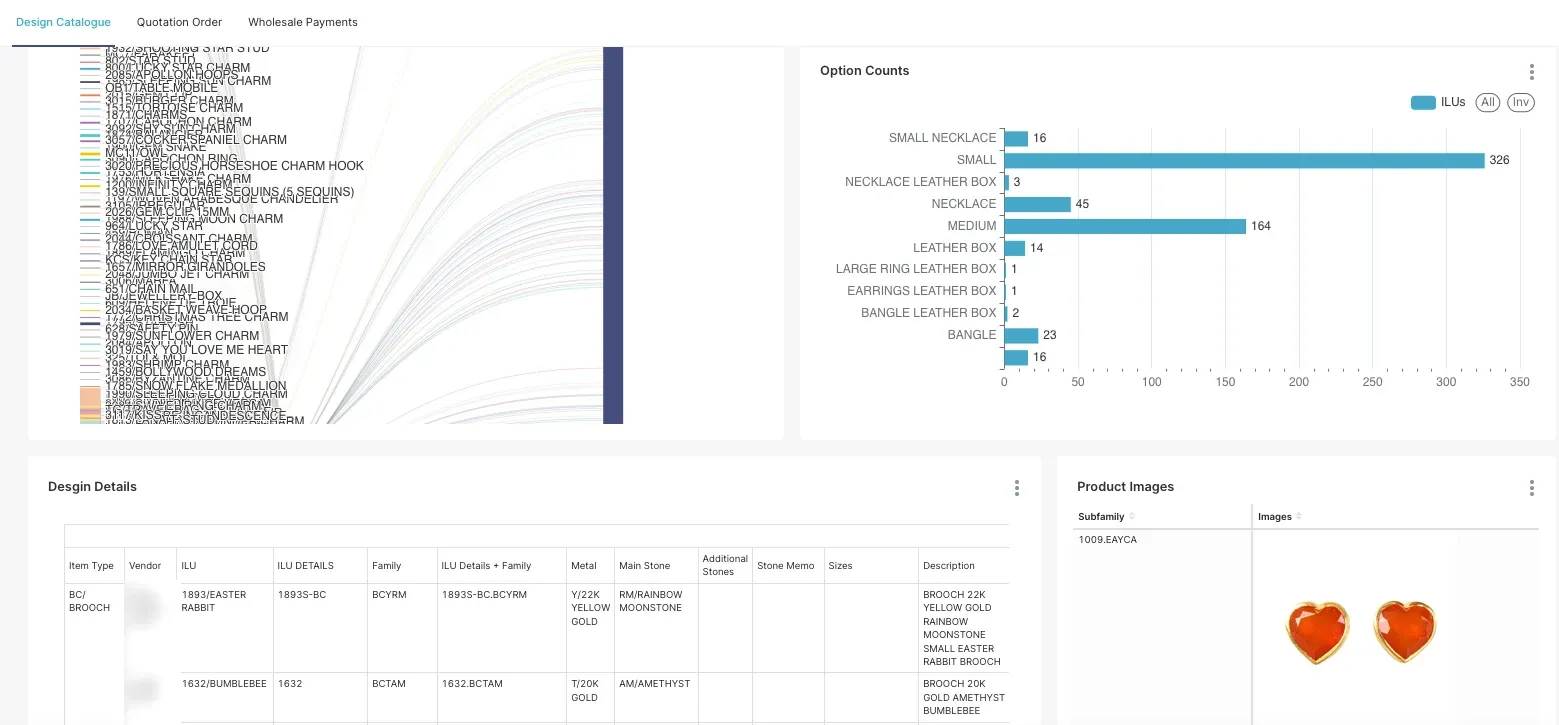
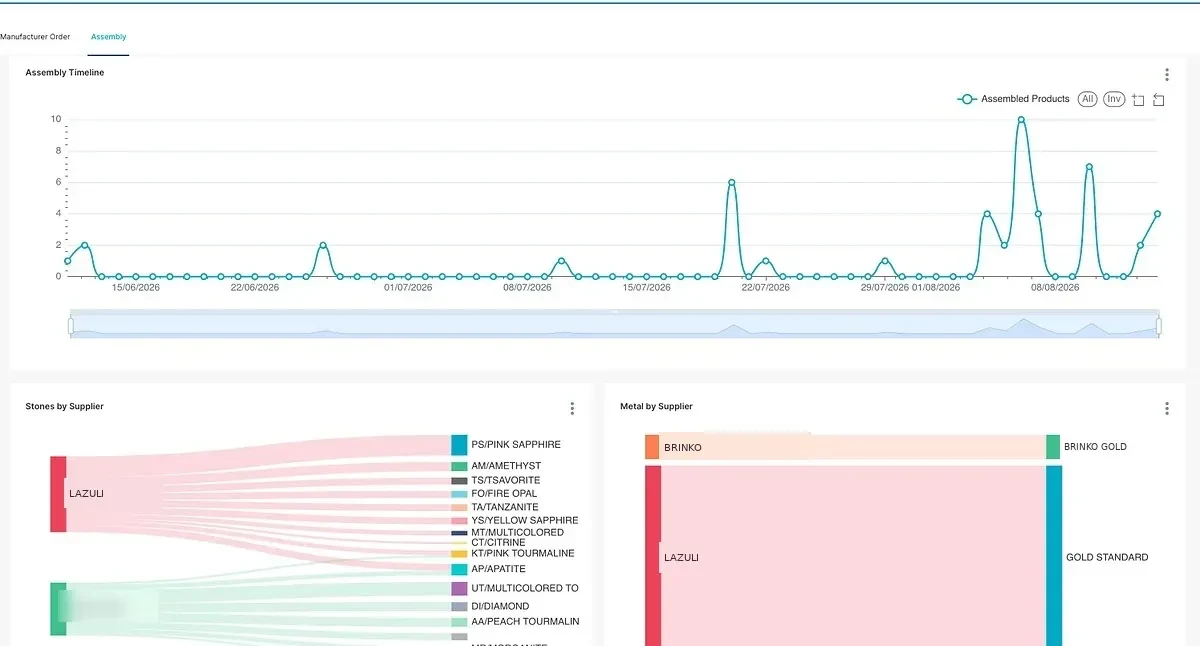
The relationship view shows products, suppliers, stones, metals and assembly activity as parts of the same operating picture.
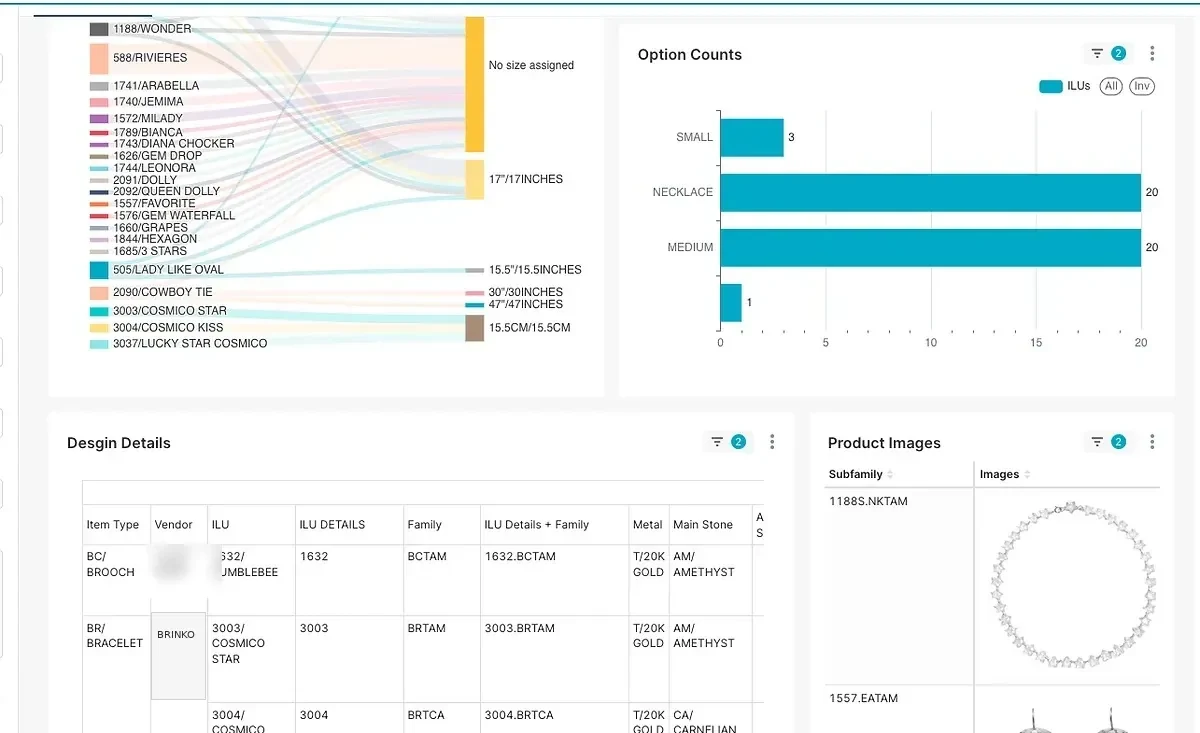
The product remains visible.
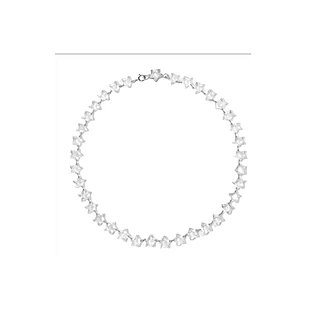
Family, design details, vendor, material, stones and real product imagery can be read together.
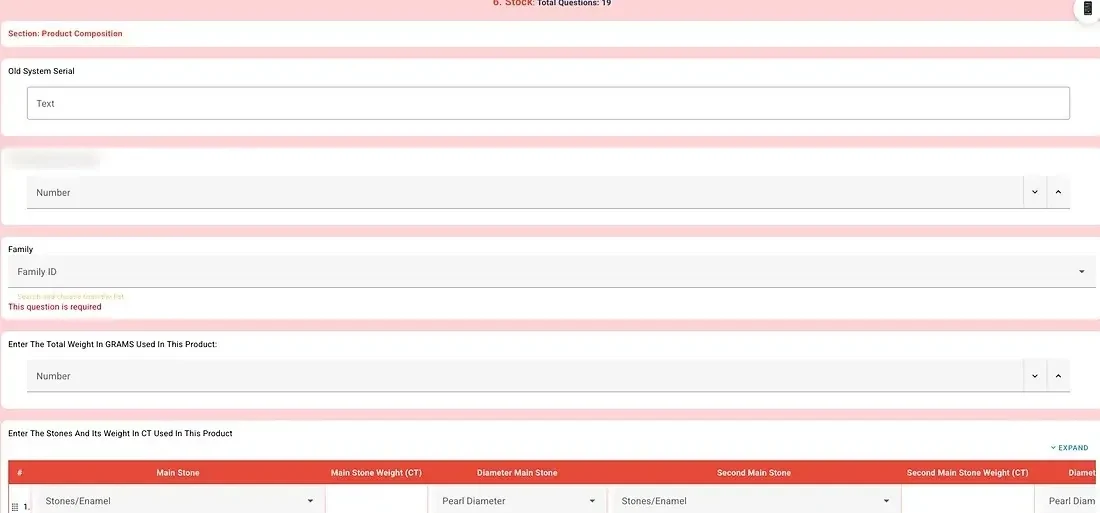
Composition carries through to stock.
The same operating logic continues into serials, family, weights, stones and the product’s later physical state.
Supplier names in these views are anonymised as Lazuli and Brinko; client and other vendor names are blurred.
An object stopped being an isolated status update.
See the whole object.
Design, composition, supplier, quality state, stock position and documentation can be read in context.
Coordinate dependencies.
Teams can see what happened, what is missing and which actor or production stage is involved.
Retrieve history directly.
Later questions start with an existing record.
The first product flow created a record. The next ones created operational memory.
Each later event starts with a history already present, then adds another layer. Orders, quality checks, movements, modifications and documents extend the operating memory around products, suppliers and components.
One product history exists.
Product identity, composition, supplier and core operating context form a common starting point.
Every new event extends it.
A quality check, stock movement, modification or shipment attaches to what is already known.
Patterns and exceptions become visible.
Recurring delays, component issues and supplier performance can be investigated because records accumulate.
The next decision starts with what the operation already knows.
History becomes the reference for the next order, production decision, service question or analysis.
The system became a shared operational memory. It is a reference that gains value as the operation continues.
- Supplier delays
- Production bottlenecks
- Quality recurrence
- Stock anticipation
- Document readiness